 MICRO
Killa of Laverne
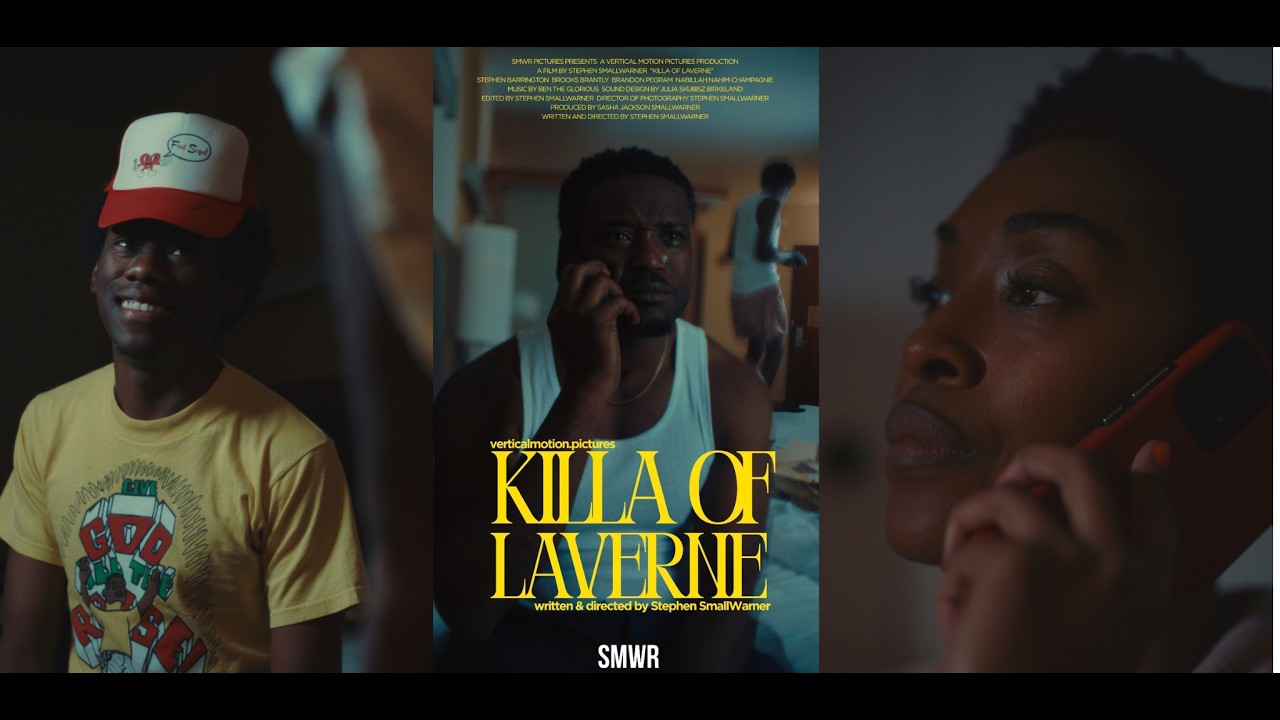
The Series Score
Live-action
Filmed, not AI-generated — no AI Slop Meter applies.
Find this series in
Watch on YouTube View on Kineograph
⚠ Report a problem with this video
Kineograph does not host films on its platform. This video is embedded from the creator’s own account on a platform such as YouTube, TikTok, Instagram, Facebook or Suno. Any ads you see on this video are handled by that platform and the creator. Kineograph does not own this video and does not receive any ad revenue from it. We encourage you to support and follow the creators whose work is showcased on Kineograph. Visit their social media and/or personal websites.
A man sits in a hotel room the night before he is due in court, a case folder on the table, drinking heavily — and spends fourteen minutes deciding what kind of man he is.
My Verdict
Killa of Laverne is a deliberately made film, and it knows it. Stephen SmallWarner wrote, financed, directed, shot and edited it himself, and the film behaves like a one-act play that happens to fit in a phone: one man, Alton, in a hotel room on the night before court, with a case folder, a drink, and a choice he has already made and cannot stop re-making. There was a break-in. That much the film confirms, and little more — whose house, what exactly happened, and what Alton did are left in the in-between, in the aftermath, in the quiet of a single person sitting with it. A suited man arrives with documents and tells him to put it behind him ("You sure you want to see these?" / "I think I can decipher what's good for me"), offers help ("I'm a phone call away"), and leaves with a parting shot that lands harder than any verdict: "I can't believe you're still playing these dumbass games, man. You gotta grow up." In the bathroom, Timothy says he was going to be a father, and Alton answers that he saw her on the stand. A ghostlike figure drifts through the film without it ever becoming a ghost story. The film closes with full end credits and the VMP production logo — a complete, stand-alone ending.
What earns the score is craft in service of a question, not spectacle. The 9:16 frame is composed natively for a phone held in one hand — the wide shot in vertical works differently, and SmallWarner frames wides around the subject rather than the environment, keeping Alton close and the room tight around him. The moral ambiguity is the point: not whether Alton's choice was legally right, but how a man searches for clarity inside himself after making it. Where it strains is also clear from its own design: fourteen minutes of one man sitting with guilt is a demanding watch, the withholding can read as vagueness if you want the procedural rather than the play, and the film's pleasures are all quiet ones — there is no release, no twist that reorders everything, only a man and a folder and a morning coming. I would rather have that honesty than another wedding finale.
Spoiler Alert
This review discusses the ending. If you would rather watch the film first, we recommend you do, and then come back.
Synopsis
Alton, played by Stephen Barrington, sits in a dimly lit hotel room on the night before he is due in court. A case folder sits on the table. He is drinking heavily. A man in a dark suit arrives carrying a bag of documents, lays them out ("You one of these?" / "Sit on table"), and advises him to put it behind him, offering future help. After the suited man leaves, Alton remains seated, distressed, talking to himself about the games he is still playing. Elsewhere in the film, in a bathroom, Timothy tells Alton he was going to be a father, and Alton answers that he saw her on the stand. The film moves through its eight parts the way a one-act play moves through scenes: the same moral question from different angles, a narrator who may not be reliable, a ghostlike figure who appears without the film ever becoming a ghost story. It ends with the full end credits — "KILLA OF LAVERNE" title card with cast and crew — followed by the VMP production logo.
The Review
One room, one night
The whole film is a test of whether a vertical frame can hold a stage play, and it passes because SmallWarner never apologises for the frame. The camera stays on sticks, the lenses stay long, and Alton stays close — the hotel room is not a location so much as a conscience with wallpaper. The drinking is not a prop; it is the clock. Every time Alton reaches for the glass, the morning gets closer, and the film is honest about what that means: this is not a man preparing a defence, it is a man deciding whether he can live with the one he already has.
The visitor with the folder
The suited man's scene is the film's spine, and it is played almost entirely in quiet. He does not argue, threaten or comfort — he lays out papers, asks whether Alton really wants to see them, and tells him to put it behind him. The offer — "I'm a phone call away" — is the kindest line in the film and the most damning, because it shows Alton exactly how easy it would be to let the system carry him. His answer, "I think I can decipher what's good for me," is the whole character in one sentence: a man insisting on his own judgement precisely when his judgement is what got him here. When the visitor returns to deliver the final admonishment about his "dumbass games," it lands because it is not a stranger's judgement — it is the voice Alton already hears in his own head.
Guilt, staged rather than explained
What stays with me is how little the film explains and how much it stages. The break-in is confirmed but never reconstructed; the court case is tomorrow but never shown; the woman on the stand is named only in passing. Instead we get the aftermath: a man, a folder, a bathroom conversation about a child who will not be born, and a ghostlike figure who may be memory, may be conscience, and is never labelled. That restraint is the film's gamble — it trusts the viewer to sit in the in-between with Alton rather than demanding a verdict from them — and it is also its risk. If you come wanting the procedural, the film will feel like it is withholding the story. If you come wanting the play, it is the story.
The craft is the argument
It would be easy to praise the lenses and miss the point: the classical cinematography is the film's thesis. Vertical drama is usually shot fast and loose; this one is shot like a feature that happens to be tall. The low-key lighting, the close-ups, the somber score, the split-diopter effects used to introduce the ghostlike figure — all of it says that a phone screen deserves the same discipline as a cinema screen. That is a real position, argued with pictures rather than press releases, and it is why the film earns its place.
Best Scene (the visitor's return)
"You gotta grow up." The suited man has already left once, having laid out the documents and offered his help. He comes back, briefly, for one last line — disbelief that Alton is still playing games, and an instruction to grow up. It is the only moment in the film where someone says out loud what the whole fourteen minutes have been circling, and Alton has no answer for it. The scene works because it is not a confrontation; it is a door closing.
Final Thoughts
Killa of Laverne is a fourteen-minute one-act play that trusts its audience: a man, a folder, a morning coming, and no easy verdict. It is a carefully crafted vertical drama, and its restraint is its point — guilt staged, not explained.
★★★★ — A one-act play for the phone, shot like a feature.
Scene Breakdown
- The hotel room — Alton alone, white dress shirt and loosened black tie, case folder on the table, drinking heavily, the night before court.
- The visitor — A suited man arrives with documents, lays them on the table, advises Alton to put it behind him, offers help ("I'm a phone call away"), leaves, returns briefly with the "grow up" admonishment.
- The bathroom — Timothy says he was going to be a father; Alton answers that he saw her on the stand.
- The ghostlike figure — Appears without the film becoming a ghost story.
- The close — Full end credits ("KILLA OF LAVERNE" title card with cast/crew credits) followed by the VMP production logo.
Episodes
| Episode | Title | Runtime | |
|---|---|---|---|
| Episode 1 | Episode 1 | 14:08 |